Frank Valdes went to mediation in early April, seeking a loan modification for the four-bedroom house in South Kendall now worth half what he paid for it in 2005. The lender's representatives said he qualified -- but they needed 45 days to get approval.
He's still waiting.
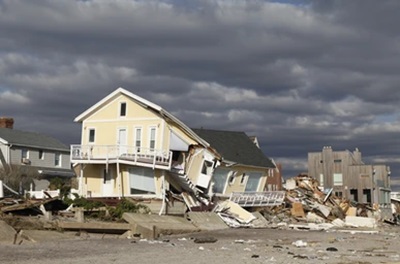
Going through foreclosure is still a miserable ordeal. But 2010 is shaping up as a better year than last in this region swamped by home foreclosures. For one thing, filings in South Florida courts have dropped sharply so far this year compared with 2009.
For another, changes in the foreclosure process -- including online auctions, mandatory mediation and funding for retired senior judges who can focus on foreclosure cases -- are expected to relieve the paralyzing court backlogs of the past two years.
New measures -- including a yet-to-be-unveiled Fannie Mae program -- are aimed at speeding foreclosure procedures, allowing people to get on with their lives and figure out where they are going to live.
Delays and uncertainty are still common, says everyone involved. Lenders continue to cancel a high percentage of foreclosure sales at the last minute. And one of the fixes for reducing caseloads -- mandatory mediation aimed at keeping people in their homes -- has yielded only mixed success so far.
``Is the backlog as bad as last year? No, it's a little better,'' said Howard Forman, Broward County's clerk of court. ``I hope toward the end of this calendar year we'll see [more] improvement.''
DADE DOWN 38%
In Miami-Dade, new foreclosure filings have fallen 38 percent in the first five months of 2010, compared with the same period last year -- from 29,674 to 18,327, according to the Miami-Dade County clerk of court's office. In Broward, the decline was similar, with 17,565 new filings this year through June 16, compared with 51,670 for all of last year, Forman's office reports. In Monroe County, there were 620 new filings through June 18, compared with a total of 1,913 in 2009, according to the clerk of court's office there.
In Miami-Dade, there were 78,888 pending cases as of May 31. There also are large backlogs in Broward and Monroe counties.
Experts say the number of fresh filings is smaller -- though still far above the pre-recession years of 2006 and 2007 -- because the waves of foreclosures due to flawed sub-prime mortgages and job losses already have peaked.
A SOUR NOTE
There are signs, however, that commercial foreclosures are increasing, and concerns that residential foreclosures due to the re-setting of rates under adjustable-rate mortgages may accelerate.
The three South Florida judicial circuits hope that requiring mediation before foreclosure cases can proceed in court will lead to settlements that lighten the court caseload. Miami-Dade started requiring mediation in homestead foreclosure cases last summer, while Broward and Monroe will launch their programs July 1 under the Florida Supreme Court's statewide order.
But many observers, including Judge Jennifer Bailey, administrative judge of Miami-Dade's civil division and leader of a statewide taskforce on streamlining foreclosures, say mediation often hasn't worked as well as expected, with lenders and borrowers coming to mediation unprepared or poorly informed.
Bailey said she hears stories about lenders not having looked at the documents before the mediation session, and borrowers walking in with unrealistic expectations. But judges don't know for sure what's really going on because mediators are required to keep the proceedings secret -- even from judges. ``Our ability to punish misbehavior is limited by the confidentiality privilege,'' she said.
THE NEW RULES
Albert Orosa, vice president of the American Arbitration Association, which will handle mediations in Broward, said the Supreme Court's new rules should address some of those problems. Borrowers must receive financial counseling and provide full disclosure documentation 30 days before mediation. And at the mediation session, lenders must have a representative with full authority to settle the case. Orosa predicts mediation could reduce the courts' foreclosure caseload by half.
Weston attorney Roy Oppenheim, who works with clients whose homes are in foreclosure, said mediation can be successful if the mediator is skilled and the lender has read the documentation and knows the value of the property and the holding costs. ``I enjoy mediations and find them very effective,'' he said. ``But I won't mediate unless the bank has done its homework.''
Attorneys who handle other types of civil cases, such as personal injury and commercial lawsuits, hope mediation helps clear the dockets because the foreclosure flood has slowed their cases as well. Neal Roth, a partner at Grossman Roth in Coral Gables, said Miami-Dade judges' uniform motion calendars -- where lawyers resolve procedural issues in five-minute hearings -- used to have 20 cases and now have 60. Foreclosures also have delayed the scheduling of ``special set'' hearings, which last up to an hour.
HURRY UP AND WAIT
``It's vexing, not only to people in foreclosures but to all other civil litigants trying to get their cases moved through the system,'' Roth said. ``Now you can sit for two hours until you get called.''
That was a surprise to Judge Bailey, who said Miami-Dade judges were supposed to have moved foreclosure cases to a separate calendar a year ago. ``There should not be motion calendars here being blocked by foreclosures,'' she said.
One reform that has streamlined the system in Broward and Miami-Dade is the move to online auctions of foreclosed properties. In Broward, where online auctions started in April, six members of Forman's staff now can focus on processing old and new foreclosure cases rather than spending three days a week in the courthouse lobby selling properties one by one, said Kris Mazzeo, director of the Broward clerk's civil division.
Miami-Dade, which switched to online auctions in January, is auctioning about 1,000 properties a week, with 20,000 properties in the sales queue. Clerk of Court Harvey Ruvin calls the new method a ``wonderful'' innovation that will boost the local real estate market by getting more properties into the hands of bidders other than banks.
About 20 percent of sales are now going to non-bank bidders, up from less than 10 percent. ``That will get these properties out of the distressed bank umbrella to someone who will pay taxes and homeowner assessments,'' he said.
MASTER CALENDAR
In April, Bailey established a foreclosure master calendar for uncontested residential foreclosures; starting in mid-July she's launching a catchup calendar for old cases filed before 2009. Both are staffed by retired senior judges, paid by new state funding. The goal is to move cases along faster and free the rest of the judges to deal with other types of cases.
But she complains that lenders cancel foreclosure sales more than half the time, leaving homeowners in limbo, because they can't make a decision about how to best mitigate their losses. On a recent day when Bailey presided over the foreclosure calendar, out of 200 cases set for sale the lenders moved to cancel 133. Some cases get re-set as many as six times.
Lenders complain about how long it takes to get a summary judgment hearing in a foreclosure case, which can be as much as 90 days, Bailey said. But the courts aren't causing the delays.
One positive development, the judge said, is that Fannie Mae, the government-sponsored mortgage agency, is setting up a new program in Miami-Dade to speed the resolution of foreclosure cases. About half the county's residential foreclosures involve Fannie Mae-backed mortgages. Under this plan, Fannie Mae will place contracted staffers in the main law offices representing lenders to facilitate mediation and make sure cases move efficiently.
STILL, FRUSTRATION
Despite these efforts, homeowners like Frank Valdes find themselves spinning their wheels.
Valdes, who works in upholstery, said when he went to mediation back in April, he provided full financial documentation, including his and his wife's pay stubs and bank statements.
The mediator in Valdes' case has had plenty of experience handling prickly matters. It was former Miami-Dade County Manager Merrett Stierheim.
But in this case, Stierheim wasn't able to push through a settlement. Earlier this month, instead of giving him a decision, the lender asked him to again provide financial documentation.
``They already have this information. I'm working 12 to 14 hours a day, and now they're taking my time away from my family to do this again because they're backlogged,'' Valdes said angrily.
``No one can twist the bank's arm, they hold all the cards,'' said Valdes' attorney, Dennis Donet of Miami. ``When they ask you to jump through 20 more hoops, you gotta do it.''
That has left Valdes and his family with continuing uncertainty and anxiety about their housing situation. And the lender isn't getting paid, nor is it getting the situation resolved.
Says a frustrated Valdes, ``Do they want another empty house?'' he asked.